So, for those of us watching, isn’t Her Maj’s send-off a much heightened representation of what everyone either has faced or will inevitably face as sure as night follows day – the death of a loved one? We watch the ornate blizzard of ritualised mourning & we channel our own experience in & through it. Which, as I was taught by one of my drama teachers all those years ago. is exactly what actors do: conduits for empathy & relation. On a good night, anyway.
Royalty & the performing arts – certainly in this country – have always had a curiously adjacent relationship. The word ‘Royal’ is riveted tightly to the words ‘Shakespeare Company’, ‘Opera House’ & ‘National Theatre’ – in order, so it seems, to declare a quasi-ownership of the performance & of the performer by the sovereign. This, of course, is an arrangement that King Charles II & actress Nell Gwynn would have wholeheartedly endorsed during the Restoration – admittedly in a more straightforwardly carnal fashion.
On the other hand, a mighty keystone of everything we do in our industry was laid by William Shakespeare over four hundred years ago when he spent much of his creative energies portraying, explaining & satirising kings & queens to lots of shouty, inebriated people on the South Bank. You could make an argument that Shakespeare took ownership of royalty in a way that no other playwright or poet has ever managed to achieve before or since. Actors back then, of course, were often employed by the court to entertain it – often by pretending to be it (in varying degrees of dramatic disguise). But since then, throughout the monarchy’s stately procession from all-powerful leviathan to decorative bauble, the relationship between royals & the acting profession has resembled more & more that of a couple of garish dolls in the same box of toys, there to be dressed up & played with by a nation in need of some diversion.

“And what do you do?”
“The same as you, ma’am.”
Nowadays, celebrity actors resting idle inbetween Netflix engagements gaze with dead eyes from the same pages of Hello! magazine that the royals do, both parties seeking affirmation in expensive soft furnishings & utterly bland subheadings. We currently get into a lather over which actor will portray which member of the Royal Family on telly & on the stage, unsure as to which of them we’re more excited by. Indeed, lines are now so blurred that actors & royalty occasionally marry each other as a mutually beneficial career move & try their luck in LA.
Ultimately, as we eye each other from across opposite banks of the Thames, there’s an unspoken understanding between the two camps that we’re basically two sides of the same coin: people on the margins of society tasked with putting on a great show for the tourists whilst society wonders when the hell any of us will get a proper job.
Devaluing the coin
Of course, the gap between pomp & circumstance has been shrinking every century. When Elizabeth I attended a posh couple’s wedding in 1595, Shakespeare dazzled the assembled guests by staging A Midsummer Night’s Dream – & included a gorgeous passage that compared the ageing virgin queen to “a fair vestal thronéd by the West” who’d successfully dodged Cupid’s love-bolt before drifting off “in maiden meditation, fancy-free”. In 2022, Elizabeth II had tea with a pretend bear that talked in the voice of Ben Wishaw.
Exit pursued by a bear.
In 1520, Henry VIII & his French opposite number held a jaw-droppingly ostentatious open-air summit in France as a means of encouraging amity between the nations. It was called the Field of the Cloth of Gold & was a dazzling pageant that went on for days – mock battles, huge feasts, music, jousting, games, with literally everything decked out in gold: tents, costumes, armour, the lot.
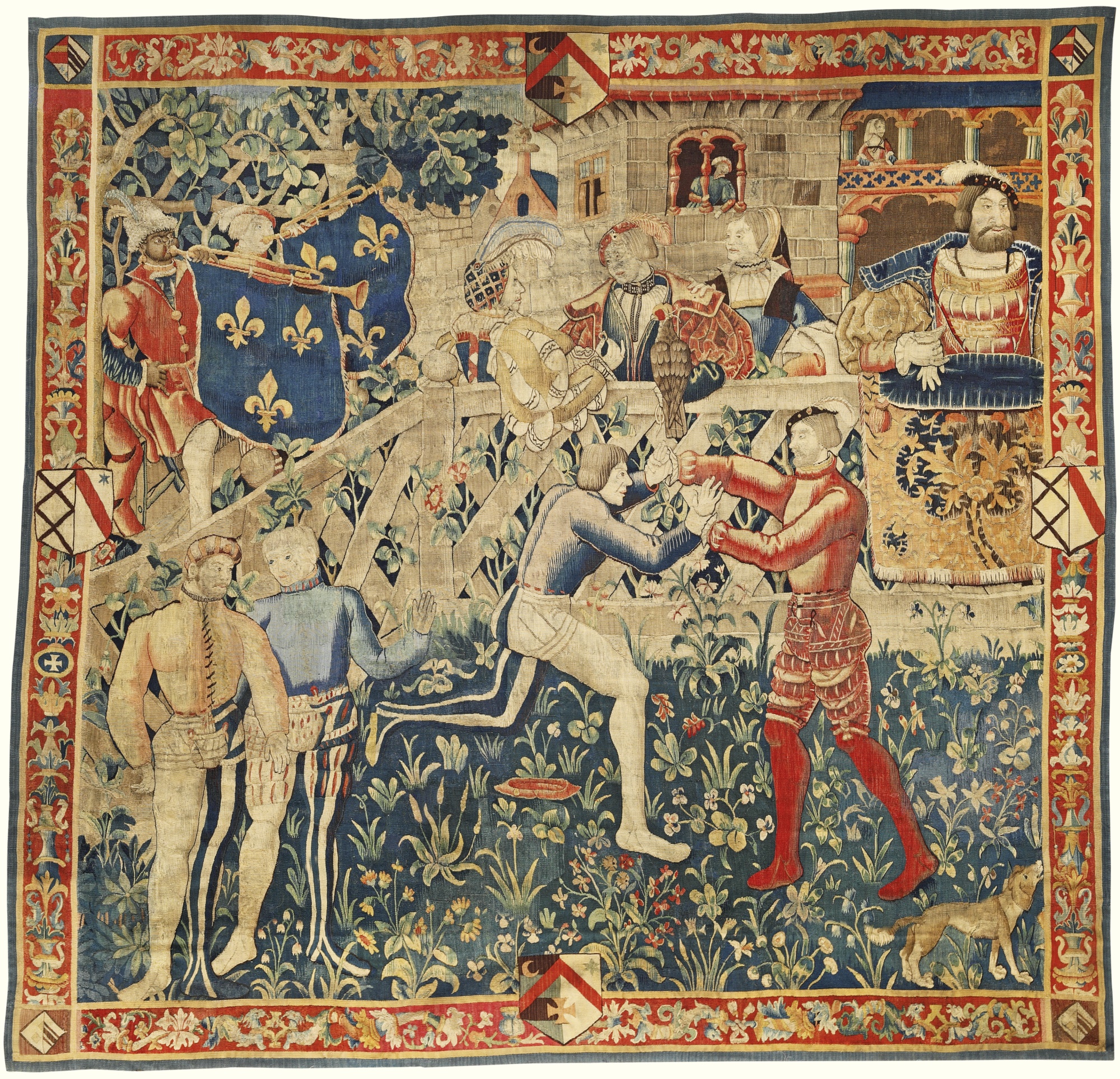
Flinging the Bling
In 1987, Prince Andrew – whilst dressed as a large carrot – knocked Jenny Agutter off a plastic log into the lake around Alton Towers in ‘It’s a Royal Knock-out’.
What a falling off was there.
As far as my own attitude to royalty is concerned, I share with many British people a vague agnosticism – occasionally contemptuous, occasionally fond – tempered every now & then by a startling surge of something unusual when watching a news item featuring a coffin or a bereft corgi. After all, like almost everyone else in the country, the Queen was part of my childhood, gazing serenely over space hoppers, classic Dr Who & half-day closing on Wednesdays – the nation’s curious little Granny Goddess that sat atop its hurly-burly with her utterly inscrutable smile. Nonetheless, I have a standard rational default setting which believes that a 21st century monarchy where everyone is bolted fast to a revolving wheel of impenetrable preferment makes about as much sense as a druid in charge of a science lab.
That said, I have another internal setting that kicks in when the system overheats occasionally. This setting summons stained glass windows, ghosts & ineffable whispers carried on the dust of ages. I’m afraid this sort of occasionally Gothic internal atmosphere is unavoidable for a cathedral chorister – those buildings mark you for life. This setting loves a bit of ritual & makes me quiver at the brute strength of unrestrained archetypes as they pin my psyche up against a wall & demand it comes out to play. The proudly sane man of the enlightenment that normally pulls the levers behind my eyes watches aghast as thousands upon thousands of apes stand in a gigantic muttering line for the chance to briefly shuffle past a little, dead she-ape in a box parked in a big, draughty building. But then Proud Sane Man goes for a wee-break & Sweaty Benighted Man-Child grabs the controls & instantly starts channelling Elgar over the sound of eternal weeping & the unfurling of flags. One version of me sees the looting of centuries sat atop a gigantic blood-stained edifice. The other sees a fairy on a Christmas tree.
Bloody hopeless.
A Royal Audience
Of course, I’ve recognised the proximity of the royal family to what I do for a living for years. I once got beaten up at the feet of Prince Edward when he was made patron of the National Youth Theatre in 1986. We were rehearsing a play called Zigger Zagger, a drama about football hooligans. As I screamed: “City! SHIT! City! SHIT!” before being carefully bundled to the floor by some teenagers sporting extravagant mullets, I was seized by a transgressive thrill of delight on feeling the full weight of Edward’s sweetly vacuous gaze, clearly unsure how to respond to this moment of simulated urban savagery. Graham Chinn – the director, a ferocious republican from the East End – was ecstatic as he contemplated being struck off any future honours list.
I think it was one of Edward’s first forays into patronage. He stepped gingerly into the room under the wing of Bryan Forbes, bright-eyed & nervous – but certainly looking the part: double-breasted, a little stiff, hand in jacket pocket with just his thumb showing, every gesture shading into the gauche, rictus smile superglued to a blazer. I lay there spreadeagled at the Prince’s feet, learning how to look the part of a foul-mouthed oik from the terraces, as he looked on vacantly, learning how to look the part of a thoroughly engaged envoy from Mount Olympus come to visit the little people.
In the end, for all the immense power & reach relative to our own less reverent times, Shakespeare knew exactly what kingship was – & indeed what it would always be. From the prologue to Henry V through Prospero’s lines in The Tempest via Cleopatra’s sullen realisation that one day she’d be played by a spotty little boy on the streets of seventeenth century London, Shakespeare understands that a king or queen is merely an actor, that regal power is theatre pure & simple, power that requires dressing up in a damned good costume to do its job – but that that costume is ultimately as perishable as the human being it clothes.
Melted into air
On the day Her Maj died, the immediate response of our show, Witness for the Prosecution, was co-ordinated with every other production in the West End. As arranged, the cast all stepped into the chamber just before the beginning of the show & stood silently observing a two minute silence with the audience. Then the opening drum roll of the national anthem was heard piped through the speakers. One brave soul in the audience stood up during the opening bars – hurriedly followed by everyone else as they rediscovered this peculiar custom from a different age hiding under the sheets. At which point, with the music rising to its tremulous climax, the male usher on my left started sobbing. I saw an actor starting to grizzle on the opposite side of the chamber. Then some members of the audience joined in with subdued but audible weeping. And before you knew it, there was a general heaving of shoulders & blowing of noses. It all eventually came to an end following the closing orchestral flourish when Toby, manager of front of house, bellowed from the stage: “GOD SAVE THE KING!” The lights went down & the company proceeded to perform a play about the brutal murder of a rich old lady to a somewhat bewildered audience – a play set in 1952 & which contains various court procedural references to Her Majesty the Queen.
By way of a final flick of the wrist, one of the cast, Richard Teverson (who plays Myers, counsel for the prosecution) had managed to persuade the director of some episodes of ‘The Crown’ to attend that night. Richard had played a friend of Helena Bonham-Carter in a couple of episodes. Sorry, I mean a friend of Princess Margaret.
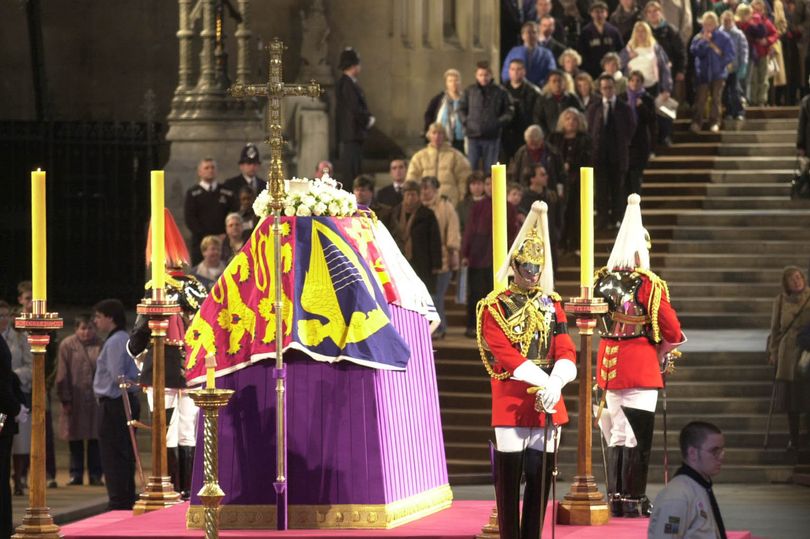
Our revels now are ended. These our actors,
As I foretold you, were all spirits, and
Are melted into air, into thin air:
And, like the baseless fabric of this vision,
The cloud-capped towers, the gorgeous palaces,
The solemn temples, the great globe itself,
Yea, all which it inherit, shall dissolve,
And, like this insubstantial pageant faded,
Leave not a rack behind. We are such stuff
As dreams are made on; and our little life
Is rounded with a sleep.
William Shakespeare
The Tempest
Act 4, Scene 1.
God speed, Your Maj. Here’s hoping the kids don’t f**k it up.
0 Comments