In October last year, I joined the company of the world’s longest-running play, The Mousetrap, by Agatha Christie at the St Martins Theatre in London’s West End – and today, March 19th, it will celebrate its 30,000th performance since its opening night at the Ambassador’s on November 25th 1952. To put that in perspective, that’s approximately three & a half million minutes of stage time. Or, for even more perspective: if the original cast after their very first curtain call had chosen not to become shit-faced at the opening night party before trudging home through the smog to their miserable garrets & landladies resembling Alec Guinness, but instead had immediately returned to the beginning of the play and relentlessly repeated their performance over & over again, for thirty thousand times, never surfacing for air, snatching sleep & food in the wings, grinding cheerfully through the 1950s without having to deal with food rationing, the Cold War & the rise of Cliff Richard – it would have taken them just under seven years.
And they would never have had it so good once it was all over, clearly.

To describe The Mousetrap as an “institution” is to flirt gratuitously with a cheap punchline involving forbidding Victorian buildings, ceaseless repetition and mental illness. Yet there is nevertheless something gloriously deranged about a play that has resolutely presented itself to the paying public for over seventy years without the slightest concession to shifts in British taste, fashion, or theatrical flavour. It’s a gorgeous wee time capsule, glacially shifting from contemporary drama to period piece simply by virtue of never going away – literally the same show as it was in 1952, bar the actors. And even they’re pretty indistinguishable from the originals. Just slightly better fed.
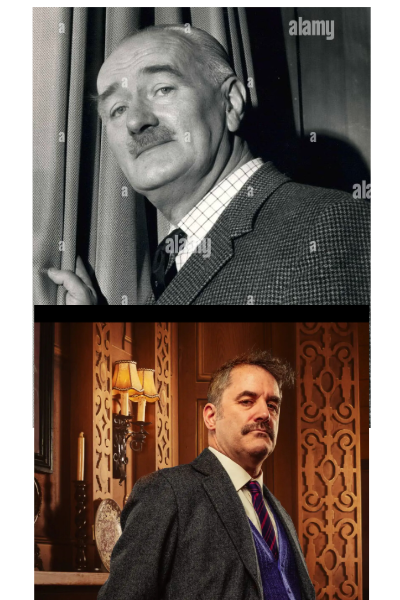
Indistinguishable
A Very Comfy Time Capsule
Actor-director Philip Franks, all-round class act & a true Agatha-phile, is the latest in a very select line of directors tasked with keeping our 73 year old grande dame from nodding off into her soup. The 30,000th performance will feature his second cast & our first day of rehearsal was spent being introduced to the legendary Mousetrap set as well as reading the script.
For an actor in his mid-fifties, I must concede that the seating arrangements in this play are exemplary. There are armchairs aplenty, and during rehearsals, I pushed hard for my character, Major Metcalfe, to avail himself of all of them. Thus a two-hour show becomes easier on the pins whilst maximum value can be extracted from the weekly wage. Granted, the Major has to sit ramrod straight in each chair like a garden fork stuck in a cushion, but there’s a delightfully comfortable sofa in the wings for stretching out between scenes should the back give out. I can usually rely on the younger actors to shake me awake for my next entrance.
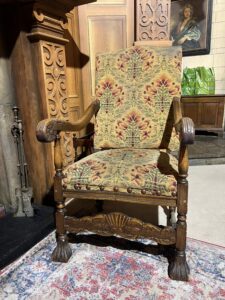
Pleasing
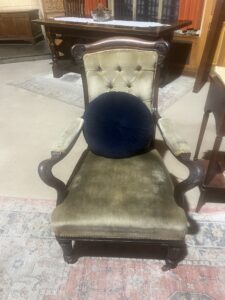
Exemplary
That sofa has a proud history: it used to hog centrestage for most of the play’s run (how any actual acting happened around it, God only knows) but last year, in an unprecedented concession, the Christie estate, not renowned for its pliability, allowed Pip to move it to the wings to be replaced by two armchairs. No one quite knows how he pulled off this minor miracle—it’s the biggest change since the show moved to St Martin’s in 1974—but it’s improved the feng shui no end.
And there’s a lot more to enjoy in the wings. FX are refreshingly analog: a horizontal door thuds ominously to signal an entrance; a wind machine is cranked by a stagehand as if performing a vigorously indecent act with a trouser press; and the pièce de résistance is the “snow room,” a cupboard of joy that spews foul-smelling foam for ten seconds, leaving the actor covered in moist flakes that have the residual odour of paraffin with just a hint of urine. Honestly, I’m like a six-year-old in that cupboard, arms outstretched, grinning madly – “Wheeeeeeee!!” – before preparing for my entrance as the Major covered in pretend snow, smelling like an incontinent old man leaving a garage. Sort of thing that makes the career worthwhile, frankly.
Cupboard of Joy: click on the link
Better Than You Think
The first day of rehearsal is also Pip’s chance to help the actors discover the brilliant little piece that lurks beneath the sediment of received opinion about this play – & thus to fully invest in the emotional arc of a naive young marriage high on optimism that is then brutally laid siege by buried trauma & madness. In short, the first half should play like Rattigan – the second like Strindberg.
To those who may not know the set-up, Monkswell Manor guest house, under the stewardship of newly married couple, Molly & Giles Ralston, is about to open its doors for the first time to a bunch of post-war misfits & oddballs: a nervy young architect with a secret; a terrifying old battle-axe, also with a secret; an old soldier with a passion for antiquated buildings – secret? – you bet; brusque young woman with a horsey laugh and (slight intake of breath) a pair of trousers (plus secret). And a diabolically greasy foreigner who shouldn’t even be there. With an impenetrable accent. AND A SECRET. (Also, a copper who shows up at the window.)
Molly & Giles begin the play adorably gauche & full of nerves. They’re Tom & Barbara from The Good Life. Or even better: Basil & Sybil Fawlty enjoying their first day in the hotel trade, long before the marital frost has set in. The first third of the play is frothily comedic with a smidgeon of farce – the fizz on the surface of a new adventure. Unfortunately, those peculiar guests arrive in the middle of a snow storm. Before long, Monkswell is cut-off from the outside world – & then something unspeakable happens when the lights go out. And it stops being funny. It is the great-great-grandma of theatrical murder mysteries.
But beneath the cozy whodunnit trappings lies a much more interesting piece than people assume. It’s a story written when the country was returning from war – & not quite recognising itself in the mirror. In the controlled chaos of demob, ordinary people rise & fall without trace. The play is about the fundamental unknowability of people who live in the same house as you, the same room, the same marriage – the crawling fear of the stranger beneath the skin. And thereby Christie poses one of the most important questions human society can ever ask itself: can I trust anyone at all?
She also gets her teeth into the post war class system & suggests a country beginning to come apart at the seams; she subtly champions LGBTQ characters two whole decades before homosexuality was decriminalised; & very clearly cautions against completely putting faith in authority figures. Most disturbingly, Christie depicts our capacity for cruelty towards children – & how that trauma cascades down the generations.
So, a comfortable pipe & slippers of a theatrical experience only if you’re not remotely concentrating.

Getting her teeth into it
Whydunnit
The Mousetrap has weathered decades of critical dismissal, condescension, and even sabotage (in the 1970s, Time Out magazine hated it so much it ran ads revealing the killer’s identity to discourage attendance & there were members of the middle classes waving placards outside the theatre & everything). Yet it abides & has become a beloved cultural touchstone. Why?
Partly, I suppose, due to its formidable momentum: who would dare call time on a show seen by over ten million people? But also it’s unquestionably down to Christie’s storytelling genius. The plot has an elegance to it, a pocket-watch precision – & the impact of the big reveal can be measured in gasps from the audience – still! The play’s themes—mistrust, trauma, the fragility of identity—are timeless & today, the production seems more popular than ever, enjoying a surprising resurgence. Its special place as West End mascot was reinforced when it was chosen as the first show to open after the Covid shut-down – and with a much more committed social media presence & the ascent of Agatha ever further into the cultural pantheon, we now regularly play in front of full – & often sweatily clamorous – houses, thirty thousand shows in.
Gosh, suddenly in demand and appreciated after decades of bloody-minded persistence. Now that’s a career arc I can run with.

Gosh
What a wonderful tribute to the longest running play. Well done Owen this has made me look forward to seeing this on the 29th March.
Fabulous! Thanks Cheri. X
What a splendid way to begin my day here in Western Australia, Owen! Your exquisitely crafted tribute to The Mousetrap evokes a deep longing within me to journey home and witness it firsthand. Bravo!”
Thankyou, Auntie H! Never say never. 🥰 xx
Thoroughly enjoyed reading this article Owen, full of thought provoking insights. I hope that the anniversary show was a ball and that you remain in demand, as you deserve to be!
Thankyou squire! 😊🙏
I think that proves humans are still better than AI. Take note kids… there’s nothing like the personal touch! Bravo Owen… how you wrote that so eloquently I will never know. Enjoy this chapter with well deserved delight xx
Bless your heart, Tom. One day, I’ll get around to doing a retrospective on Murder in the Dark. It was, after all, something of a wee homage to The Mousetrap. And shared a nursery rhyme with it. 😉